Why Real-Time Systems Matter More than you think (Especially in Critical Infrastructure)
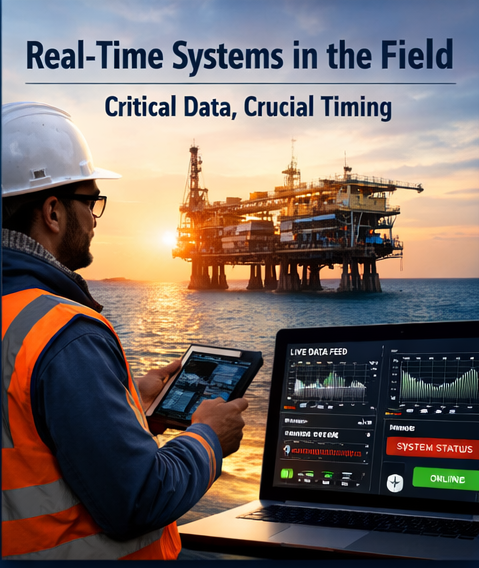
We talk a lot about speed in software.
Faster apps, faster APIs, faster load times.
But in some systems, speed isn’t just a nice-to-have; it’s the difference between safe operations and serious risk.
That’s the reality of real-time systems.
In environments like aviation, oil and gas, and remote monitoring, data isn’t just valuable; it’s time-sensitive. And when that timing is off, even by seconds, the consequences can be significant.
What is a real-time system?
A real-time system is one where the timing of data delivery is just as important as the data itself.
It’s not enough for the system to be correct; it has to be on time.
There are two broad categories:
Hard real-time systems → delays are unacceptable (e.g., flight systems)
Soft real-time systems → delays reduce effectiveness but aren’t catastrophic
Most industrial and IoT systems fall somewhere in between; but the expectation is always the same:
deliver accurate data, exactly when it’s needed.
Where Timing Becomes Critical
From experience working with weather monitoring systems like AWOS (Automated Weather Observing Systems) and telecom infrastructure, here’s where real-time really matters. You can read more about how AWOS works in real-world aviation environments here: (https://www.devcharles.com/blog/awos-smart-infrastructure)
1. Aviation Operations
Wind speed and direction change rapidly
Visibility conditions can drop suddenly
Pilots and ground control rely on up-to-date data
Even small delays can affect landing decisions.
2. Remote Industrial Sites
Offshore and field operations depend on environmental data
Sudden weather changes impact safety and logistics
If data arrives late, decisions are made on outdated conditions.
3. Monitoring Distributed Systems
Multiple remote locations feeding into a central system
Operators need a live view; not a delayed snapshot
Without real-time visibility, you lose situational awareness.
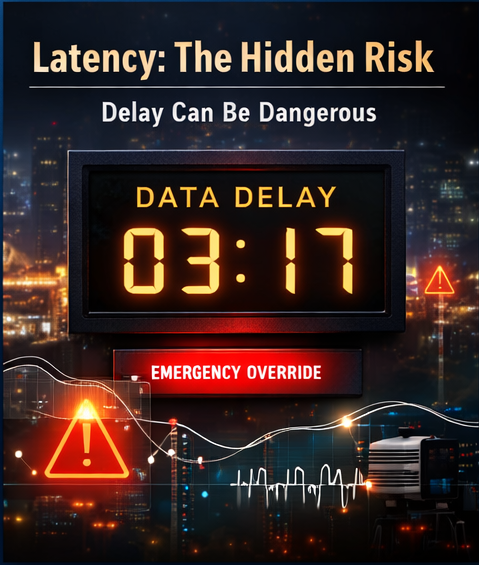
The Hidden Problem: Latency
Most people think of system failures as outages.
But in many cases, the real issue is latency; data arriving too late to be useful.
Latency can come from:
Network delays (especially in remote areas)
Poor data transmission design
Inefficient backend processing
Overloaded systems
And the tricky part is this:
the system may look like it’s working… but the data is already stale.
Reliability vs Speed (You need Both)
It’s tempting to optimize for speed alone.
But real-world systems require a balance:
Speed → data arrives quickly
Reliability → data arrives consistently and correctly
A fast system that drops data is just as bad as a slow one.
The goal is predictable performance under real conditions, not ideal ones.
Designing for Real-Time Systems
From practical experience, a few principles stand out:
1. Minimize Points of Failure
Every extra layer (network hops, services, dependencies) introduces delay and risk.
2. Use Efficient Data Pipelines
Stream data where possible instead of batching it.
3. Monitor the System Itself
Don’t just monitor the data, monitor:
Latency
Uptime
Data freshness
4. Plan for Poor Network Conditions
Especially in remote environments, assume:
Intermittent connectivity
High latency
Packet loss
Design for resilience, not perfection.
Where Software makes the Difference
This is where things get interesting.
The shift from traditional systems to modern architectures means we can now:
Stream real-time data to web dashboards
Trigger instant alerts
Store and analyze historical trends
Provide access from anywhere
In my own work, building real-time dashboards for environmental data changed how teams interacted with systems.
This transition from field engineering to software development is something I wrote about in (https://www.devcharles.com/blog/field-engineer-to-software-builder).
Instead of waiting for reports, they could see what was happening as it happened.
Lessons from the Field
A few things that stand out from working with real-time systems:
Data delayed is often as bad as data missing
Real-world conditions are always worse than test environments
Simplicity improves reliability
Visibility into system performance is critical
Real-time systems are easy to underestimate until you depend on them.
They sit quietly in the background, doing their job. But when timing breaks down, everything else starts to fail.
As more systems become connected and data-driven, the ability to design for low latency, high reliability, and real-time visibility becomes a core engineering skill.
And in many industries, it’s no longer optional.
Comments (0)
No comments yet. Be the first to join the conversation.
Leave a comment
Share your thoughts about this post.